Walk into your next IVF cycle knowing you’ve both taken care of what’s in your control.
Half of every embryo is his. Your clinic handles the medicine. Pocket Coach helps you both with everything in between: a private daily guide on your phone, one for her and one for him, with evidence-based answers for the 3 months before your next cycle: what to change, what you can keep, and what’s out of your hands.
Try it free for 7 days
Opens in your phone’s browser. Nothing to download. Email only, no card. Full access for 7 days. Your demo notes stay private in your browser and aren’t saved.
Ready now? Get Pocket Coach for both of you, $249
Why Day 3 matters for him
The Pre-IVF Pocket Coach is his daily guide to choices that support healthy sperm. 60 seconds a day, private, just for him.
Try it free for him → Why we say thisHer egg starts it. His sperm carries it on.
Every embryo needs both of you, so both of you can prepare.
Why the first days matter for her
The Pre-IVF Pocket Coach is her daily guide to choices that support healthy eggs. 60 seconds a day, private, just for her.
Try it free for her → Why we say thisPreparing together? Get Pocket Coach for both of you, $249
What it looks like on your phone.
Real screens from Pocket Coach for her. The version for him works the same way, built for him.
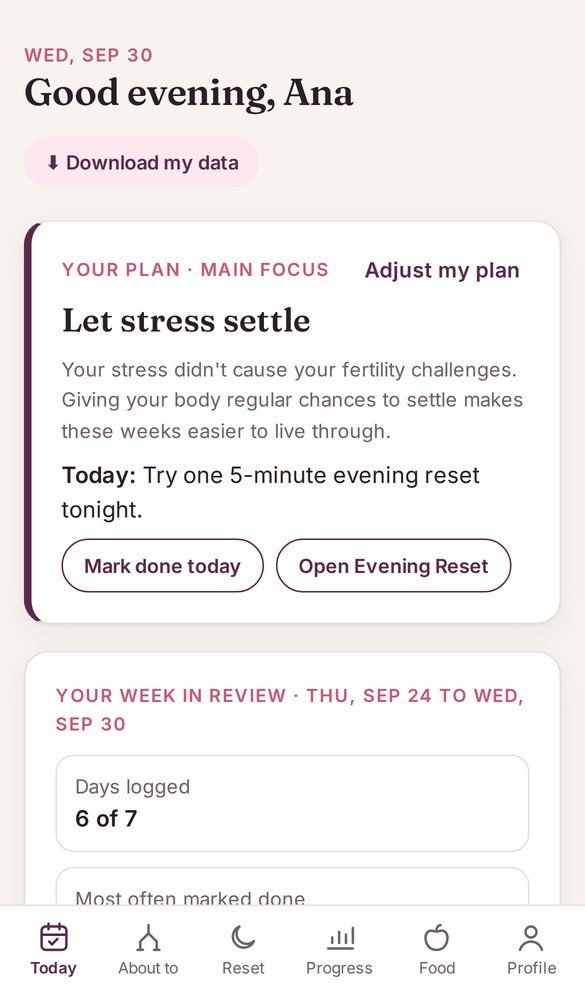
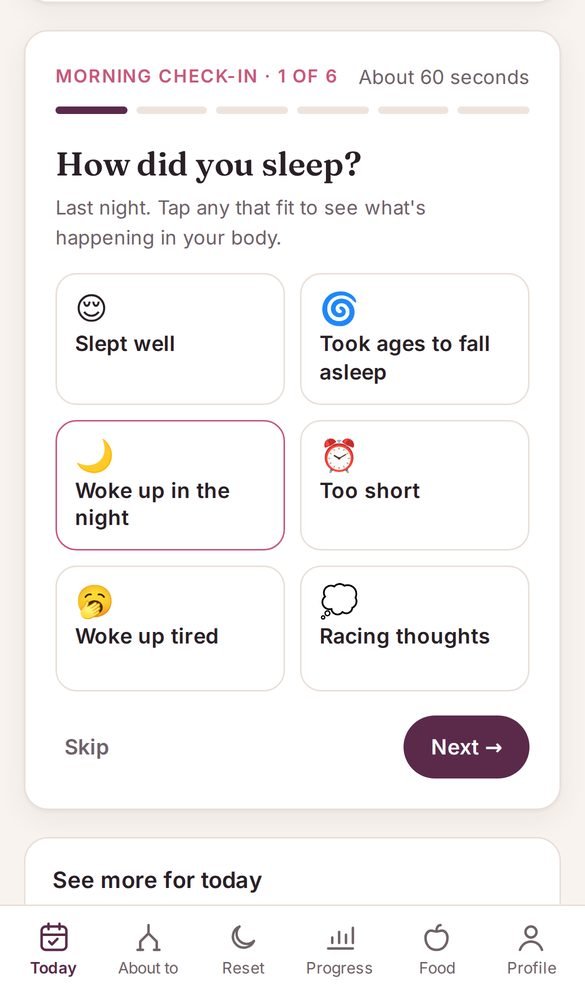
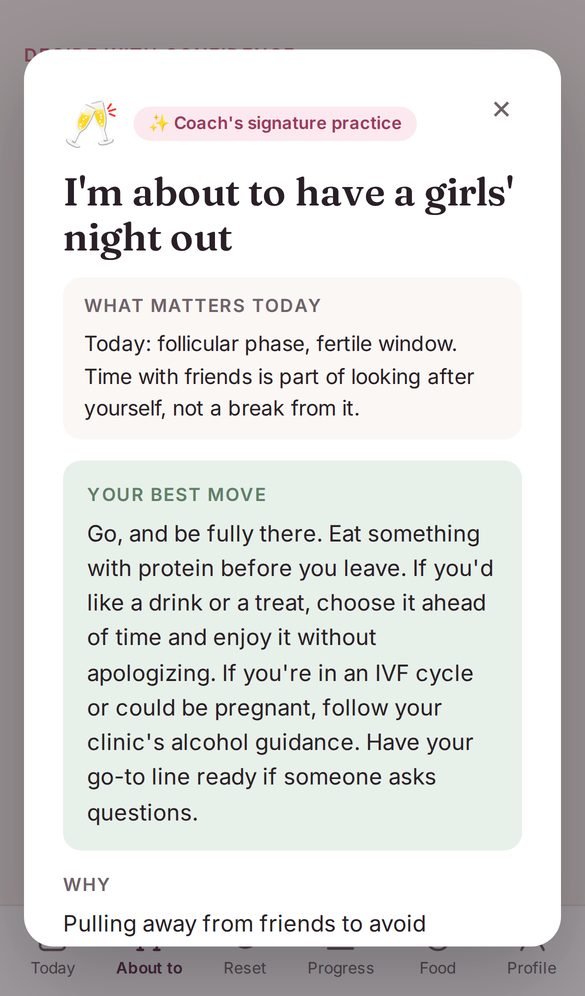
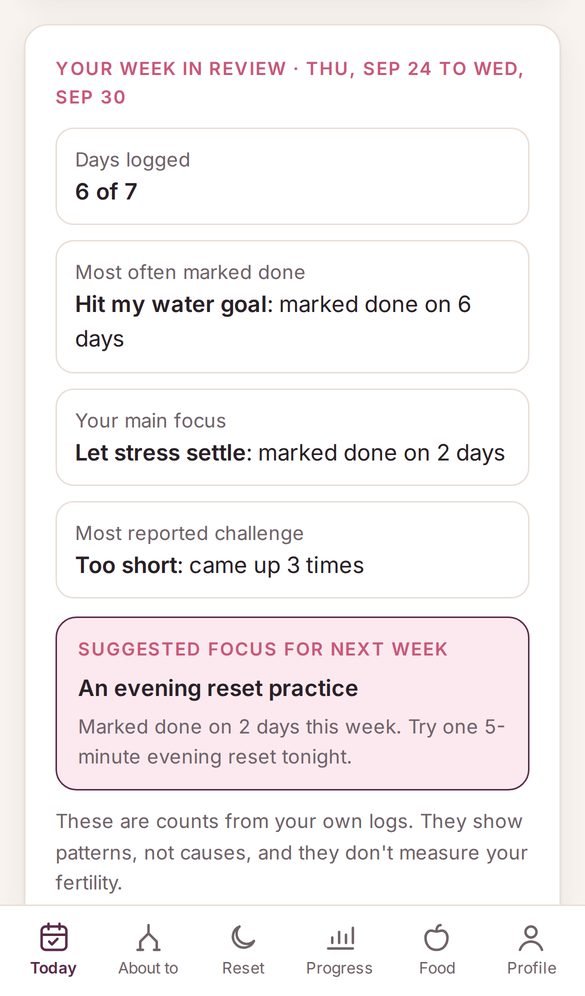
Two private coaches. One shared start date.
Pre-IVF Pocket Coach for her
Built around the 90 days before retrieval
- A 60-second daily check-in and a short step for today
- "I'm about to…" cards for real-life moments
- Food guide and evening reset
- A summary you can share with your clinic
Pre-IVF Pocket Coach for him
Built around the 74 days sperm take to develop
- A daily check-in built for him
- Heat, training and night-out cards
- A week-by-week roadmap
- A summary you can share with your clinic
Each account is fully private. Your partner doesn't see your entries.
Three simple steps.
Try it free for 7 days
Full access to Pocket Coach for her or for him. Just your email, no card.
Choose your plan
Pocket Coach for her, for him, or for both of you. One payment, no subscription.
A few minutes a day
A one-minute check-in and a short step for today, alongside your clinic's plan.
Live your life. Make each choice with confidence.
This isn't a diet or a list of things to give up. It's a coach that helps you understand why your everyday choices matter in this window, so you can decide for yourself.
Check in
Sleep, food, stress, connection. Your answers shape today’s suggestions, with your step for today at the top.
"I'm about to…"
A quick guide for real-life moments, so you can say yes to your life with confidence.
Reset
A short practice to unwind before bed, so tomorrow starts calmer.
Review
A weekly review built from your own entries, plus a summary you can bring to your clinician.
How your daily guidance is chosen
- Your check-in shapes it. What you tap about sleep, food, stress and connection changes your suggestions and your step for the day.
- It’s automatic and private. The Pocket Coach picks from Dr. Lejla’s research-based content, right on your device. No one reads your entries, not even Dr. Lejla.
- It’s guidance, not a measurement. A check-in can’t tell what is happening to eggs or sperm. It helps you notice patterns and make steadier choices.
- Your program summary is a document you can download, with your own entries, patterns and questions for your clinic. You decide whether to share it.
The cycle is not only yours to carry.
"I feel like everything depends on me."
You've read everything. You've wondered about every coffee and every late night. You don't need another list of rules. You need a calm, clear guide for each day, and to know you're not the only one holding this.
What changes: you have a plan for today, and he has one too.
"I want to help. I just don't know what to do."
He watches her go through all of it and feels on the outside. Nobody gives him instructions. But his sperm provides half of the embryo’s genetic material, so preparation shouldn’t fall on her alone.
What changes: his own private space, with a simple "here's your part today." No group, no calls he doesn't want, nothing reported to anyone.
Why daily life still counts before your cycle.
The eggs and sperm for your cycle are forming now. Your clinic runs the treatment. The everyday part between appointments is yours, and it's a first step you can take today.
The eggs for your cycle are already on their way
The follicle that releases an egg at retrieval begins its final growth about 85 days earlier. So the next 3 months are the window when the eggs for this cycle are growing.
Source: Gougeon, Human Reproduction, 1986
His half of the embryo is being made right now
Sperm take roughly 64 to 74 days to develop. The sperm used in your cycle will start forming inside this 3-month window.
Source: Amann, Journal of Andrology, 2008
Start where the evidence is strongest
The American Society for Reproductive Medicine says there is good evidence that tobacco use is linked to worse IVF outcomes. If either of you smokes or vapes, that is the change with the clearest research behind it.
Source: ASRM committee opinion, 2024
Look after your sleep and each other
Across 14 studies of 3,583 women, stress before treatment was not linked to whether IVF worked. But it does show up as sleepless nights and tension at home, and that is worth looking after for its own sake.
Source: Boivin et al., BMJ, 2011
The weeks of waiting feel different when you're doing something
In my clinical experience, couples who prepare together often say they feel less helpless in the months before a cycle, because each of them has a part to play. This is my experience as a clinician, not a study.
Dr. Lejla Fazlicic, D.Ac, L.Ac
Your clinic leads the treatment
Your protocol, medicines, tests and everything from transfer on belong with your clinic. Daily habits support you between appointments. They don't replace treatment.
Honest note: trials of lifestyle programs before fertility treatment haven't shown more live births (what the trials found). Daily habits are a first step for your health and wellbeing, not a promise about results.
When should you both start?
Her eggs finish maturing over about 90 days, and his sperm develop over about 74. Enter your expected egg retrieval date to see your shared start date, and where today sits in your window.
An estimate is fine. Your clinic sets the real date.
No date yet? Pick roughly how far away it is:
Already behind youStill ahead
Never delay treatment to finish a countdown. Your clinic's schedule always comes first.
The eggs and sperm in your embryos have already finished developing.
So this 90-day window doesn't apply to a frozen transfer. Your clinic guides everything about your transfer.
If a new egg retrieval is part of your plan later
Pick that date above, and you'll see your shared start date for it.
One daily guide for each of you
Pocket Coach gives her and him their own private daily guide, both starting on the same day.
Half of an embryo's genes come from each of you, so his part matters as much as hers. Neither of you carries this alone.
Add our start date to a calendar
See what each day looks like, free for 7 days
Ready for the full plan? Cycle Decoded Together: $249 for both of you
Your date is calculated on your device. We don't store it.
Timelines: the follicle that ovulates begins its final growth about 85 days earlier (Gougeon, Human Reproduction, 1986). Making sperm takes about 74 days (Heller and Clermont, reviewed in Journal of Andrology). General wellness information, not medical advice.
Nothing replaces your protocol. But you still have a life to live before it.
Your clinic
- Your medication and stimulation protocol
- Monitoring, retrieval and transfer
- Testing, diagnosis and medical decisions
- Guides your treatment
Your daily life, with us
- Food, sleep, stress and movement, day by day
- Confident choices for real-life moments
- Both partners, on the same timeline
- Steady routines for the weeks before your cycle

Dr. Lejla Fazlicic, D.Ac, L.Ac
A Doctor of Acupuncture with 15+ years in pre-IVF preparation, including her years at Pulling Down the Moon in Chicago, an integrative fertility center that works alongside most of the area’s fertility clinics. She works with both partners at once, and leads with the side that gets overlooked most: his.
Licensed Acupuncturist, State of Illinois (IDFPR License #198000990, active since 2011). Read her story
Built on peer-reviewed research. Every article in our Research Library cites its sources. See our Editorial Policy.
What the Pre-IVF Pocket Coach does
- Gives each of you a short, doable step each day
- Answers in-the-moment questions in seconds, from cards written by Dr. Lejla
- Explains what's worth adjusting and what you can keep
- Prepares a summary you can share with your clinic
What it doesn't do
- Replace your clinic, change your protocol or review medications
- Diagnose or treat anything
- Promise a pregnancy or a better IVF result
One year of private, self-guided preparation.
One-time payment, not a subscription.
Europe’s fertility society, ESHRE, advises fertility teams to support patients in changing everyday habits that affect their general and reproductive health (ESHRE guideline). Pocket Coach gives you that support every day, alongside your clinic.
Pre-IVF Pocket Coach for her
- Daily check-in and focus
- "I'm about to…" cards
- Food guide and evening reset
- Clinician summary
- A free 15-minute call with Dr. Lejla for your questions
Pre-IVF Pocket Coach for both of you
$124.50 each · save $49
- Both versions, each fully private
- One shared start date: 90 days for her, 74 for him
- A clear daily part for each of you
- A free 15-minute call with Dr. Lejla for your questions
Pre-IVF Pocket Coach for him
- Daily check-in built for him
- Heat, training and night-out cards
- Week-by-week roadmap for the 74 days sperm take to develop
- Clinician summary
- A free 15-minute call with Dr. Lejla for your questions
- ✓ Full refund within 14 days
- ✓ One-time payment, not a subscription
- ✓ Private and encrypted
- ✓ Pay over time with Klarna or Affirm
Questions while you're using it? Every plan includes a free 15-minute call with Dr. Lejla about your program.
Try it free for 7 days
Opens in your phone’s browser. Nothing to download. Full access with just your email: no card, no account. Your demo notes stay private in your browser and aren’t saved to a paid account.
Which one is for whom? Pocket Coach for her is for the partner whose eggs are being used. Pocket Coach for him is for the partner providing sperm. Using donor sperm or preparing solo? Pocket Coach for her works fully on its own.
The free call is about using the program, not medical care: Dr. Lejla does not diagnose or treat. Ongoing personal coaching is available separately.
Prefer to pay over time? Choose Klarna or Affirm at checkout (subject to their approval).
Prefer personal 1:1 support? See how to work with Dr. Lejla.
What can affect what? Tap a tile to see.
Five choices couples often make before IVF, and what each one can set off in the body. Tap a tile to see its path, or pick a body area to see which choices reach it.
Several of these choices reach the same body areas. So instead of fixing one and waiting, small steps in each area, started on the same day, fit how the body works. It is also doable: in a trial of 212 adults, people who changed their eating and activity at the same time reached the same healthy levels as those who changed them one after another (Make Better Choices 2, JMIR mHealth and uHealth, 2018).
Find your shared start dateThis map shows possible links and how strong the evidence is. A link in the body does not mean a choice changes your chance of pregnancy. It is not advice and does not replace your clinic.
What couples usually ask.
Will this interfere with my IVF protocol?
No. We don't touch medication, dosing or anything your clinic prescribes. The Pocket Coach covers daily life around your protocol. If you're ever unsure, ask your clinic, and follow their advice.
Do I have to give up coffee, wine or going out?
This isn't a list of bans. You’ll understand why each choice matters in this window, and you decide. Many couples find they change less than they feared, and feel calmer about what they do change.
Why a year, if the window is 90 days?
Cycles don't always go to plan or on schedule. A year covers your preparation now and gives you time to continue or restart if your date moves or you need another cycle.
What if I'm not doing IVF, or I'm preparing on my own?
For natural conception or IUI, the same 3 months of preparation apply. For a frozen transfer, your embryo already exists, so this window isn’t about egg or sperm quality, but Pocket Coach for her can still support sleep, stress and daily routines in the weeks around your transfer. Pocket Coach for her works on its own if you're using donor sperm or preparing solo.
How is this different from a fertility app?
It was designed by Dr. Lejla, who has spent 15+ years preparing couples for IVF alongside fertility clinics. It covers both of you, each with a private Pocket Coach. Your daily check-in shapes your suggestions automatically, your entries are encrypted so no one else can read them (not even Dr. Lejla), and every plan includes a free 15-minute call with Dr. Lejla for your questions.
Does it recommend supplements?
No. The Pocket Coach never recommends supplements or medication. Those questions belong with your doctor or clinic, and the Pocket Coach points you there.
What does the food guidance include?
A food guide that explains the “why” behind common foods and drinks, plus Mediterranean-style meal ideas for breakfast, lunch and dinner. There’s no strict diet and no banned list: you see why each choice matters in this window, and you decide.
Can my partner see my entries?
No. Each of you has a separate, encrypted account. Nothing is shared with your partner, or with Dr. Lejla, unless you choose to share it yourself, for example by sending an article or your program summary.
What if our cycle is cancelled or delayed?
Access lasts a full year, so you can keep going, or start again when your new date is set.
Is this medical advice?
No. It’s self-guided lifestyle and wellness preparation that sits alongside the care from your fertility clinic and physicians. It doesn't diagnose, treat, or promise any outcome.
What to avoid before IVF, and what you can keep
The coffee. The wine. His beer night. Get the free guide: everything couples give up before a cycle, with an honest answer for each one. Did you have to? Most of the time, no.
Two halves. One window. One plan you share.
Your clinic has the protocol. Let us guide the days in between, for both of you.
Try it free for 7 days
Ready now? Get Pocket Coach for both of you, $249